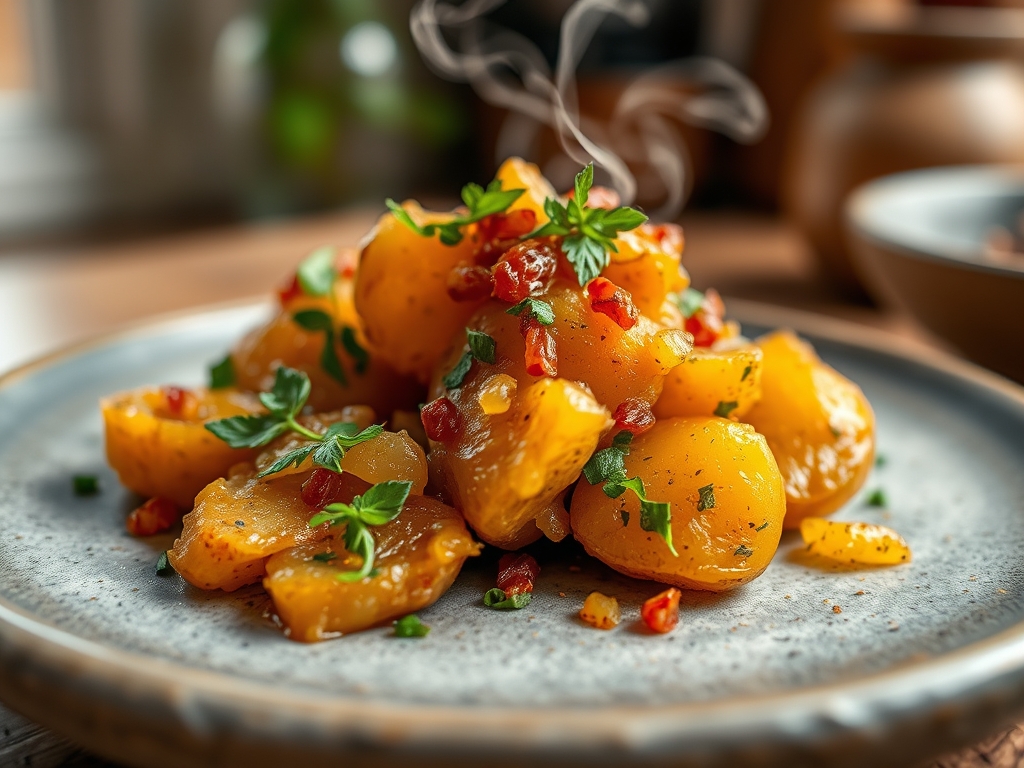
Close your eyes and imagine the humid, salt-kissed air of Marine Drive as the scent of sputtering cumin and turmeric hits a scorching tawa. That specific, golden-crusted magic is what we are chasing today. Mastering authentic bombay potato recipes is not just about boiling a tuber; it is a high-stakes lesson in starch gelatinization and the Maillard reaction. We are transforming humble spuds into piquant, explosive bites that define Indian street food. Whether you want the dry, crispy tuck-in of a classic Batata Harra style or the saucy, viscous comfort of a gravy-based dish, the science remains the same. We are looking for that perfect structural integrity where the exterior is shattered glass crisp while the interior remains a fluffy, cloud-like aerated dream. Grab your apron and your heaviest skillet. We are going deep into the chemistry of the streets to ensure every single cube of potato you serve carries the soul of Mumbai.
The Gathers:
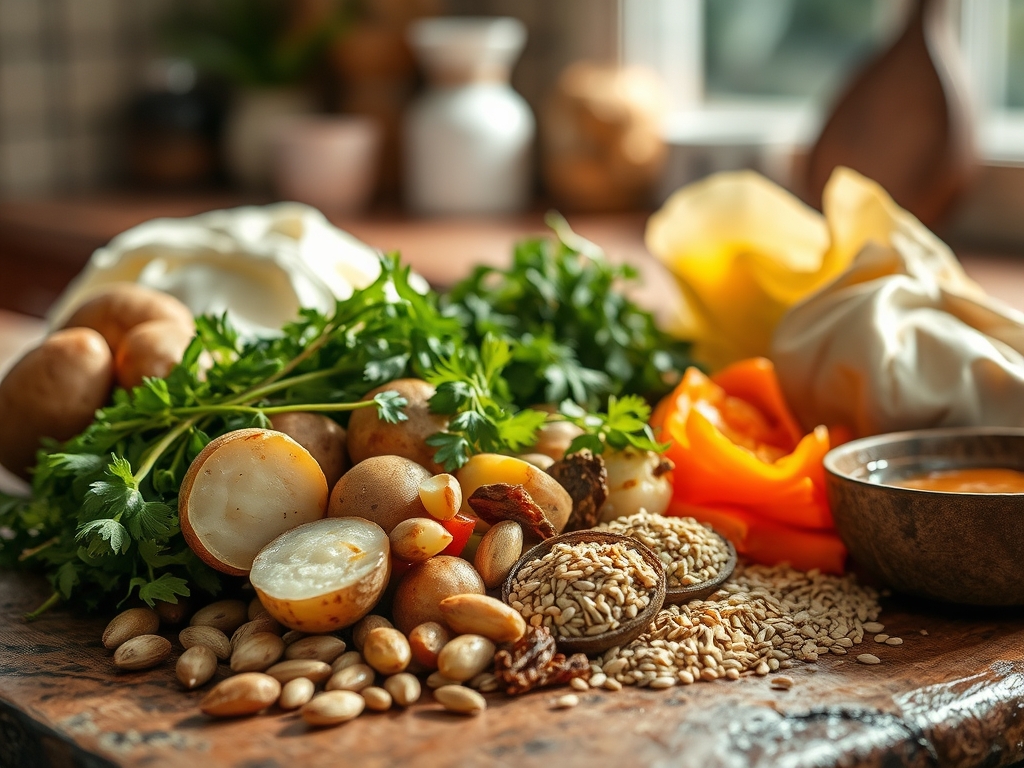
To achieve the elite texture found in professional bombay potato recipes, your mise-en-place must be precise. Start with waxy potatoes like Yukon Gold or Red Bliss; their high moisture and low starch content ensure they hold their shape during the aggressive tossing phase. You will need high-quality cold-pressed mustard oil for its high smoke point and pungent allyl isothiocyanate compounds.
The spice kit is non-negotiable. Gather whole cumin seeds, mustard seeds, and dried Kashmiri chilies. Use a microplane to grate fresh ginger and garlic into a fine paste, which creates more surface area for flavor infusion. For the acidic finish, fresh lime juice is superior to vinegar as the citric acid brightens the earthy turmeric without lingering chemical aftertastes.
Smart Substitutions: If mustard oil is too intense, use avocado oil with a pinch of mustard powder. If you are out of fresh curry leaves, a zest of lime and a pinch of bay leaf can mimic that citrusy, herbal backbone, though the authentic volatile oils of a fresh leaf are hard to replicate entirely. Use a digital scale to measure your potatoes; 500 grams is the sweet spot for a standard 12-inch skillet to avoid overcrowding.
The Clock:
Mastering the "Chef's Flow" is about overlapping tasks to minimize downtime.
Prep Time: 15 minutes. This involves the "soak and stabilize" phase. Cutting the potatoes into uniform 2cm cubes ensures they cook at the same rate.
Cook Time: 25 minutes.
Total Time: 40 minutes.
The flow begins with the parboil. While the potatoes simmer, you toast your whole spices. This "blooming" phase renders the essential oils into the fat. By the time the potatoes are drained and steam-dried, your oil is infused and ready for the high-heat sear. This overlapping method prevents the garlic from burning while waiting for the potatoes to soften.
The Masterclass:
1. The Scientific Parboil
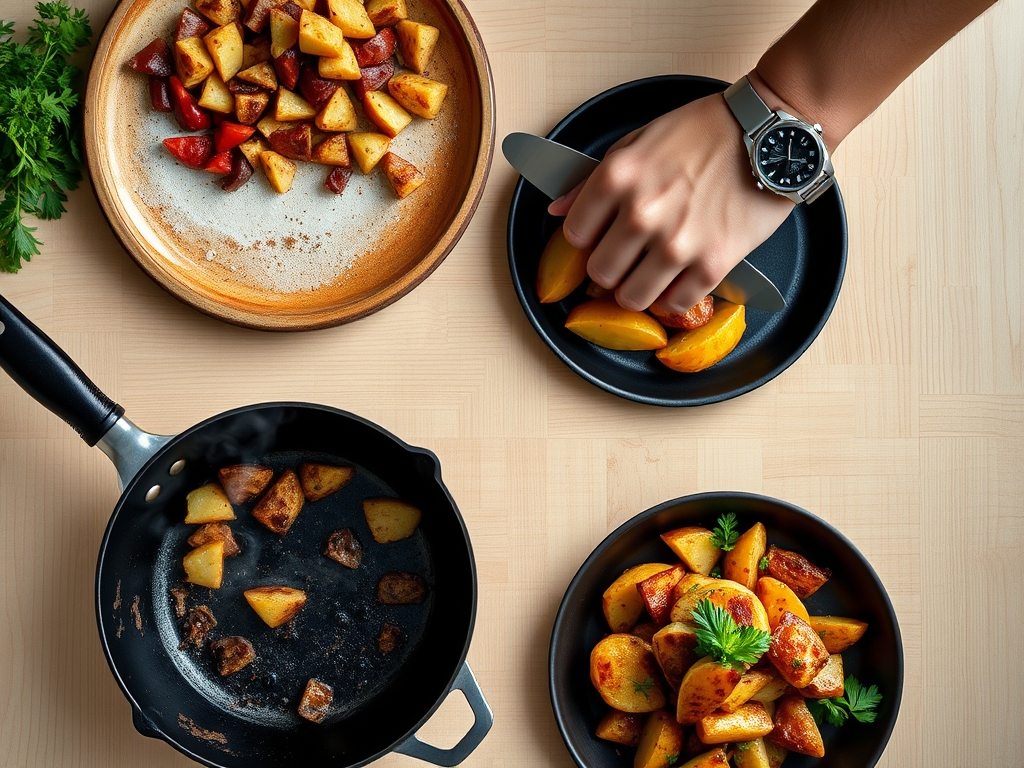
Place your cubed potatoes in cold, heavily salted water and bring to a boil. Remove them when they are "fork-tender" but still offer resistance.
Pro Tip: Adding a teaspoon of baking soda to the water raises the pH level. This breaks down the potato's pectin on the surface, creating a starchy slurry that, once fried, turns into an extra-thick, ultra-crunchy crust.
2. The Steam Dry
Drain the potatoes in a colander and shake them vigorously. Use a bench scraper to move them onto a flat tray, allowing steam to escape for three minutes.
Pro Tip: This step prevents "steaming" in the pan. Surface moisture is the enemy of the Maillard reaction. By letting the internal heat evaporate the surface water, you ensure the oil makes direct contact with the starch for immediate browning.
3. Blooming the Aromatics
Heat your heavy-bottomed skillet until the oil shimmers. Drop in mustard seeds until they pop, then add cumin and curry leaves.
Pro Tip: This is "tempering" or tadka. The heat triggers a thermal decomposition of the spice cells, releasing fat-soluble flavor molecules that would otherwise remain trapped. If the oil is not hot enough, the spices will taste gritty rather than toasted.
4. The High-Heat Sear
Add the potatoes to the skillet in a single layer. Use tongs to flip them only once they have developed a deep mahogany crust.
Pro Tip: Avoid the urge to stir constantly. Constant movement lowers the surface temperature of the pan and prevents the formation of the crust. This is known as "conduction cooking," where the direct heat transfer creates the structural snap.
5. The Spice Infusion
Lower the heat and add your dry ground spices: turmeric, coriander, and amchur (dried mango powder). Toss gently to coat every surface.
Pro Tip: Turmeric is fat-soluble. Adding it at the end ensures the color remains vibrant. If added to a dry pan, the spices can undergo "enzymatic browning" too quickly, turning bitter and acrid.
6. The Deglaze and Finish
Add a splash of water or stock to the pan and scrape the bottom. Finish with a handful of fresh cilantro and a squeeze of lime.
Pro Tip: Deglazing captures the "fond" (the browned bits stuck to the pan). This creates a light, viscous coating that acts as a flavor delivery system, ensuring the spices stick to the potato rather than falling to the bottom of the dish.
The Deep Dive:
Macro Nutrition: A standard serving of these bombay potato recipes provides approximately 180 calories, 4g of fiber, and 3g of protein. They are a powerhouse of potassium and Vitamin C, especially when the skins are left on.
Dietary Swaps:
- Vegan: Naturally vegan if using oil. Avoid ghee.
- Keto: Swap potatoes for cauliflower florets. Reduce the cook time by half to maintain a "bite."
- GF: Naturally gluten-free. Ensure your asafetida (hing) is not processed with wheat flour.
The Fix-It:
- Soggy Potatoes: You likely overcrowded the pan. Remove half, increase the heat, and fry in batches.
- Bitter Spices: The oil was too hot when you added the powders. Fix this by adding a teaspoon of sugar or a splash of heavy cream to balance the bitterness.
- Potatoes Falling Apart: You over-boiled them. Next time, use a saucier for a gentler simmer and add a splash of vinegar to the boiling water to strengthen the pectin.
Meal Prep: To reheat, avoid the microwave as it turns the crust rubbery. Use an air fryer at 350F for 5 minutes or a dry skillet. The starch retrogradation that happens in the fridge actually makes the potatoes firmer, often resulting in a better sear on day two.
The Wrap-Up:
Bringing the heat of Mumbai to your kitchen table is an exercise in patience and temperature control. By respecting the starch and mastering the bloom, you turn a simple side dish into the star of the show. These bombay potato recipes are versatile; serve them inside a wrap, alongside a cooling raita, or straight out of the pan with a toothpick. Remember, the secret is in that final deglaze that marries the spices to the spud. Now, go forth and get that golden crust!
The Kitchen Table:
Which potato is best for Bombay potatoes?
Waxy varieties like Yukon Gold or Red Bliss are superior. They contain less starch and more moisture, allowing the cubes to maintain their geometric integrity during high-heat sautéing without disintegrating into a mash.
Why are my Bombay potatoes not crispy?
The most common culprit is surface moisture or overcrowding the skillet. Ensure the potatoes are steam-dried after boiling. Use a large, heavy-bottomed skillet to ensure each cube has direct contact with the heated oil.
Can I make this recipe oil-free?
You can use an air fryer to achieve a similar texture. Toss the parboiled potatoes in a slurry of spices and a tablespoon of aquafaba or lemon juice before air-frying at 400F for 15 minutes, shaking halfway through.
What is the secret ingredient in restaurant-style potatoes?
Amchur, or dried mango powder, provides the signature "tang" that lime alone cannot achieve. It adds a concentrated, fruity acidity that cuts through the starch and fat, providing a complex, professional finish to the flavor profile.