
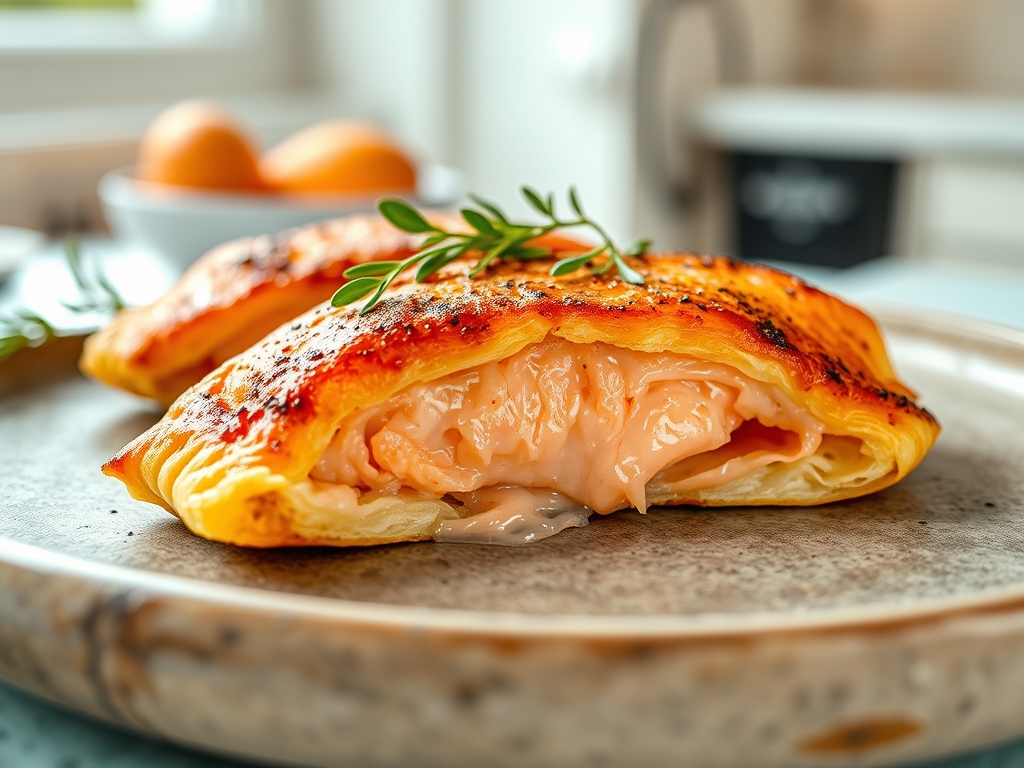
Imagine the sound of a serrated knife breaking through a thousand buttery, microscopic layers of glass. That is the symphony of the perfect crust. When you explore puff pastry salmon recipes, you are not just cooking dinner; you are conducting a masterclass in thermal insulation and moisture management. The goal is a paradox: a shatteringly crisp exterior protecting a succulent, medium-rare interior that has been gently steamed in its own juices. This dish, often called Salmon En Croute, is the ultimate flex for a dinner party because it looks like a million dollars but relies on a few clever scientific principles. We are talking about high-stakes texture contrast where the fat from the pastry meets the omega-3 richness of the fish. It is sophisticated, piquant, and surprisingly approachable once you understand how to control the steam. Grab your apron and a glass of something sparkling; we are about to turn a simple fillet into a golden, flaky masterpiece that will have your guests questioning if you secretly attended Le Cordon Bleu over the weekend.
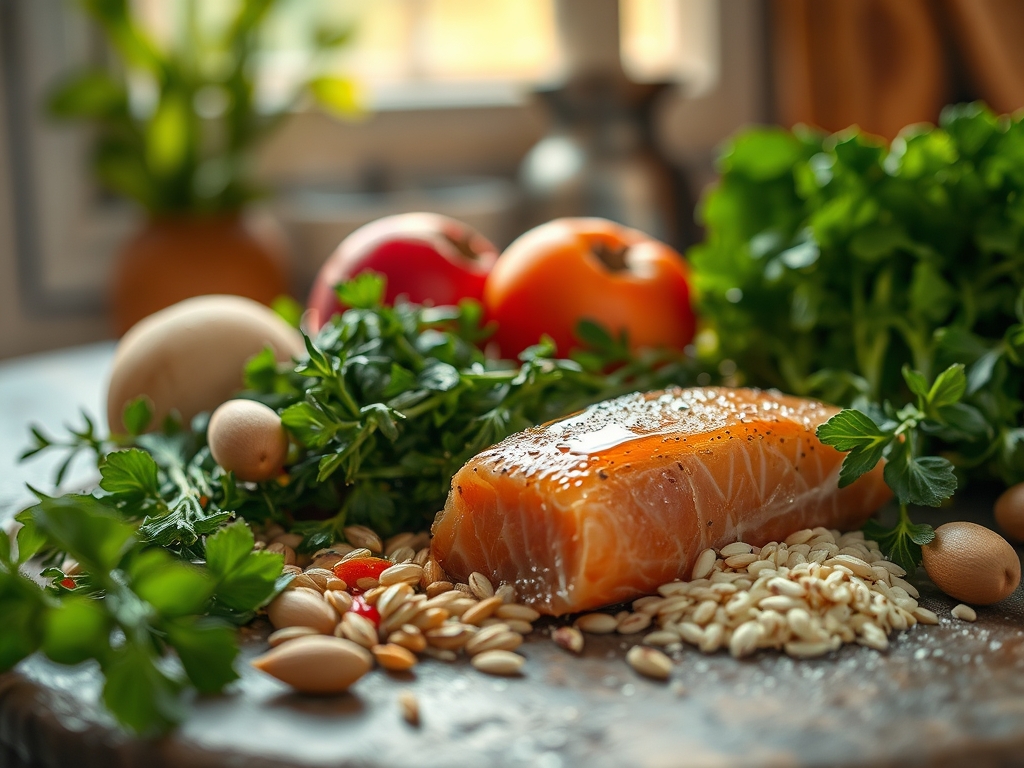
The Gathers:
To achieve the perfect result, your mise-en-place must be precise. Start with a two-pound center-cut salmon side; the uniformity of a center cut ensures even heat distribution. You will need high-quality frozen puff pastry, ideally made with real butter rather than vegetable shortening, to ensure a superior mouthfeel and better Maillard reaction. For the filling, gather eight ounces of fresh baby spinach, four ounces of full-fat cream cheese, and a bunch of fresh dill. You will also need a microplane to zest a lemon, which adds a bright, acidic lift to cut through the heavy lipids.
Smart Substitutions: If you want to elevate the flavor profile, swap the cream cheese for a thick, viscous goat cheese or a herbed Boursin. For those avoiding dairy, a cashew-based cream alternative works beautifully if you add a teaspoon of nutritional yeast to mimic the savory depth. If spinach feels too traditional, use finely chopped sautéed leeks or even a thin layer of mushroom duxelles. Just remember that any vegetable addition must be thoroughly cooked to render out excess moisture; otherwise, you risk the dreaded "soggy bottom" syndrome.
The Clock
Efficiency in the kitchen is all about the Chef's Flow. Expect to spend 25 minutes on active preparation and 30 minutes on the bake. The most critical time-saver is your freezer. You must keep the pastry cold until the very moment of assembly. If the butter in the dough melts before it hits the oven, you lose the steam-powered lift that creates those iconic layers. Total time from fridge to table is roughly one hour. This includes a mandatory 10-minute rest period after baking, which allows the internal proteins to relax and reabsorb their juices.
The Masterclass
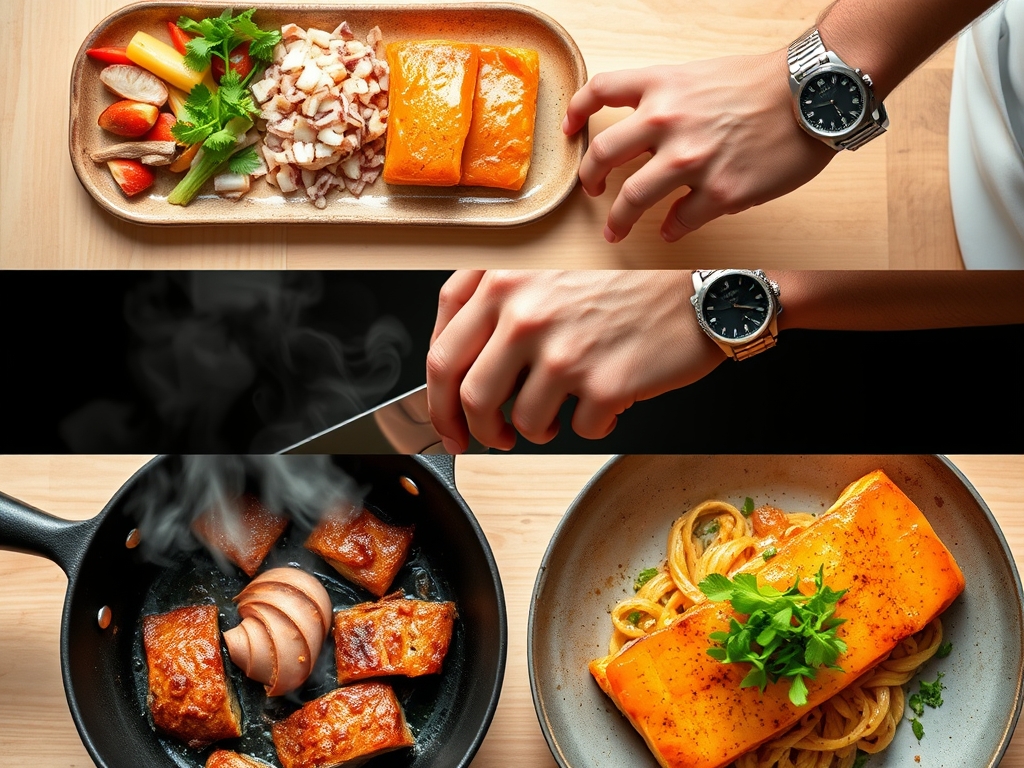
1. Prep the Greens
In a heavy-bottomed skillet, sauté your spinach with a touch of garlic until completely wilted. Once cool, place the greens in a clean kitchen towel and wring them out with all your might. You want them bone-dry.
Pro Tip: This prevents enzymatic browning and ensures that excess water doesn't turn your pastry into a mushy mess. Removing moisture is the secret to a crisp crust.
2. Season the Protein
Pat your salmon dry with paper towels. Use a digital scale to ensure your portions are even if you are making individual parcels. Season generously with kosher salt and cracked black pepper.
Pro Tip: Salt acts as a denaturant, slightly changing the protein structure on the surface to help it retain moisture during the high-heat bake.
3. Create the Herb Compound
In a small saucier or bowl, mix your cream cheese, dill, lemon zest, and a pinch of salt. Use a rubber spatula to infuse the herbs into the fat.
Pro Tip: Fat is a flavor carrier. The aromatic oils in the dill and lemon zest are fat-soluble, meaning they will permeate the entire dish more effectively when suspended in cream cheese.
4. The Assembly
Roll out your chilled puff pastry on a floured surface using a bench scraper to keep the edges neat. Place the salmon in the center, spread the herb mixture on top, and pile on the dried spinach.
Pro Tip: Keep the pastry at approximately 40 degrees Fahrenheit. If the dough gets too warm, the laminated layers of butter will fuse, and the pastry will fail to aerate and rise.
5. The Seal and Score
Fold the pastry over the salmon, sealing the edges with an egg wash (one egg beaten with a tablespoon of water). Use a sharp paring knife to lightly score a diamond pattern into the top.
Pro Tip: Scoring provides a path for steam to escape, preventing the pastry from exploding or pulling away from the fish during the rapid expansion in the oven.
6. The Golden Bake
Brush the entire exterior with the remaining egg wash and bake at 400 degrees Fahrenheit until the crust is a deep mahogany gold.
Pro Tip: The egg wash facilitates the Maillard reaction, a chemical reaction between amino acids and reducing sugars that gives browned food its distinctive flavor and color.
The Deep Dive
From a nutritional standpoint, this dish is a powerhouse of healthy fats and high-quality protein. A single serving provides roughly 35 grams of protein and a significant dose of Vitamin D and B12. However, the puff pastry adds a substantial amount of carbohydrates and saturated fats, making this a decadent "special occasion" meal.
Dietary Swaps: For a Keto version, ditch the pastry and wrap the salmon in a weave of salty prosciutto. For a Gluten-Free version, many specialty grocers now carry GF puff pastry that performs remarkably well. If you are going Vegan, use a firm block of tofu seasoned with kelp granules to mimic the sea flavor, wrapped in a vegan-certified pastry.
The Fix-It:
- Soggy Bottom: If the base is wet, you didn't dry your spinach enough. Next time, add a thin layer of breadcrumbs under the salmon to act as a sponge.
- Raw Pastry Inside: This happens if the oven is too hot. Lower the temp by 25 degrees and tent with foil to allow the inside to cook without burning the outside.
- Dry Salmon: You likely skipped the resting phase. Thermal carryover continues to cook the fish even after it leaves the oven; pull it out when the internal temp hits 125 degrees.
Meal Prep: To reheat, avoid the microwave at all costs. Use a toaster oven or air fryer at 350 degrees for 8 minutes. This re-crisps the fats in the pastry, restoring that "day-one" structural integrity.
The Wrap-Up
Mastering puff pastry salmon recipes is a rite of passage for any home cook looking to bridge the gap between "tasty" and "technical." It is a dish that demands respect for temperature and moisture, but rewards you with a texture profile that is unmatched in the culinary world. Whether you are hosting a festive holiday dinner or just want to treat yourself to a luxury Tuesday, this salmon en croute is your ticket to a standing ovation. Remember: keep your pastry cold, your spinach dry, and your oven hot. Now, go forth and bake something beautiful!
The Kitchen Table
How do I prevent the puff pastry from getting soggy?
Ensure your salmon is patted dry and your spinach is squeezed of all liquid. You can also sprinkle a thin layer of breadcrumbs on the pastry before placing the fish to absorb any escaping juices during the baking process.
Can I make this recipe ahead of time?
Yes, you can assemble the parcels up to four hours in advance. Keep them tightly wrapped in plastic in the refrigerator. Do not apply the egg wash until the very moment you are ready to slide them into the oven.
What is the best temperature to cook salmon en croute?
A high heat of 400 to 425 degrees Fahrenheit is essential. This high temperature creates immediate steam within the pastry layers, forcing them to rise and become crisp before the salmon overcooks in the center.
How do I know when the salmon is finished?
The most reliable method is using an instant-read thermometer. Aim for an internal temperature of 125 to 130 degrees Fahrenheit. The temperature will rise to a perfect 135 to 140 degrees during the mandatory ten-minute resting period.