
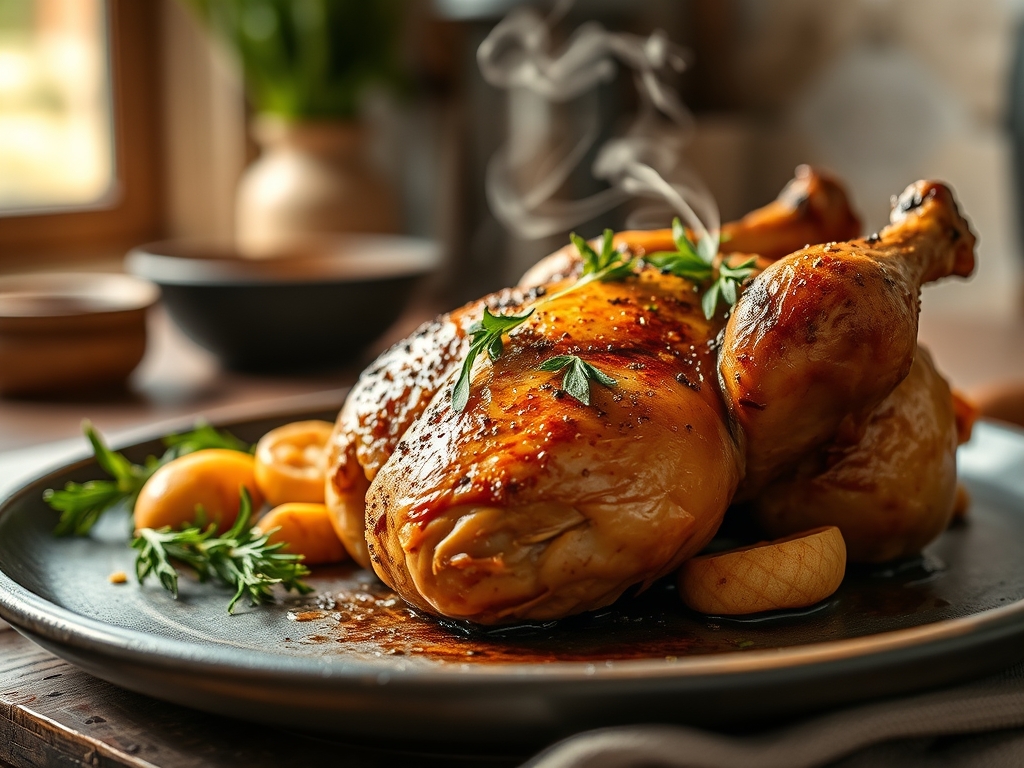
Picture the scene: your kitchen is filled with the scent of rendered fat and toasted herbs while a golden bird sits center stage, skin crackling under the slightest touch. We have all hunted for the best roast chicken recipes, but the secret to culinary greatness is not found in a dusty card index; it lives in the intersection of heat, salt, and moisture. This is about more than just dinner. It is about mastering the physics of poultry to ensure every slice of breast meat is a reservoir of savory juice.
The difference between a dry, stringy bird and a masterpiece lies in how you manipulate the protein fibers. When you understand the chemistry of the kitchen, you stop following instructions and start commanding the oven. We are going to dive into the molecular mechanics that turn a simple grocery store bird into a legendary feast. Grab your apron and your favorite heavy-bottomed skillet; we are about to elevate your Sunday dinner into a professional-grade production.
The Gathers:
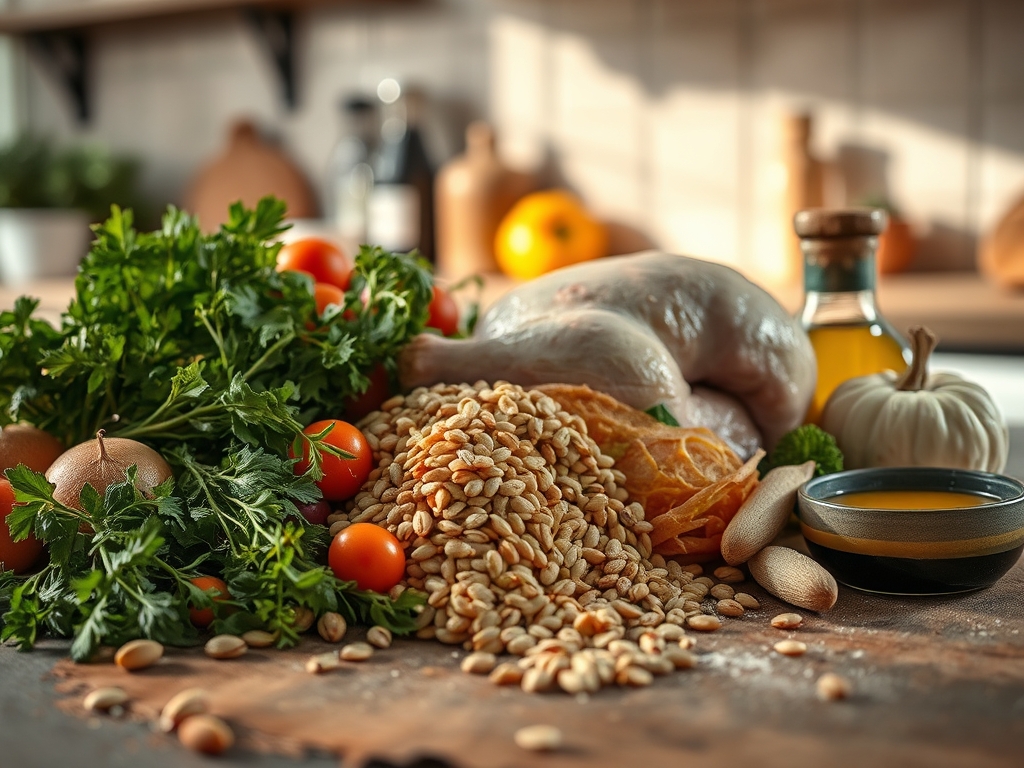
To achieve the results seen in the best roast chicken recipes, your mise-en-place must be precise. Start with a four to five pound bird, preferably air-chilled. Air-chilled poultry has not been bloated with excess water during processing, which means the skin will crisp rather than steam. You will need high-quality kosher salt; the large grains allow for better tactile control when seasoning.
For the fat, choose unsalted butter or avocado oil. Butter provides milk solids that undergo the Maillard reaction, creating that deep nutty flavor, while avocado oil has a high smoke point that prevents acrid bitterness. Your aromatic profile should include sprigs of woody herbs like rosemary and thyme, a whole head of garlic sliced crosswise to expose the cloves, and a lemon for acidity.
Smart Substitutions: If you are out of fresh herbs, a high-quality poultry seasoning with dried sage and marjoram works well, though you should use a microplane to zest some fresh citrus to brighten the dried notes. If you want a dairy-free version, use duck fat or schmaltz. These animal fats have a viscous quality that coats the skin beautifully and provides an incredible depth of flavor that olive oil cannot match.
The Clock
The "Chef's Flow" is all about managing thermal momentum. Your total active time is roughly 20 minutes, but the passive time is where the magic happens. You must account for the "Dry Brine" phase, which should last at least four hours but ideally overnight. This allows the salt to penetrate the muscle tissue through osmosis.
Preheating your oven takes about 20 minutes; do not rush this. You need the walls of the oven to radiate heat evenly. The roasting process itself will take between 50 to 75 minutes depending on the weight of the bird. Finally, the most critical time block is the 15-minute rest period. If you cut into the bird immediately, the internal pressure will force all those hard-earned juices onto the cutting board. Patience is a technical requirement, not just a virtue.
The Masterclass:
1. The Surface Preparation
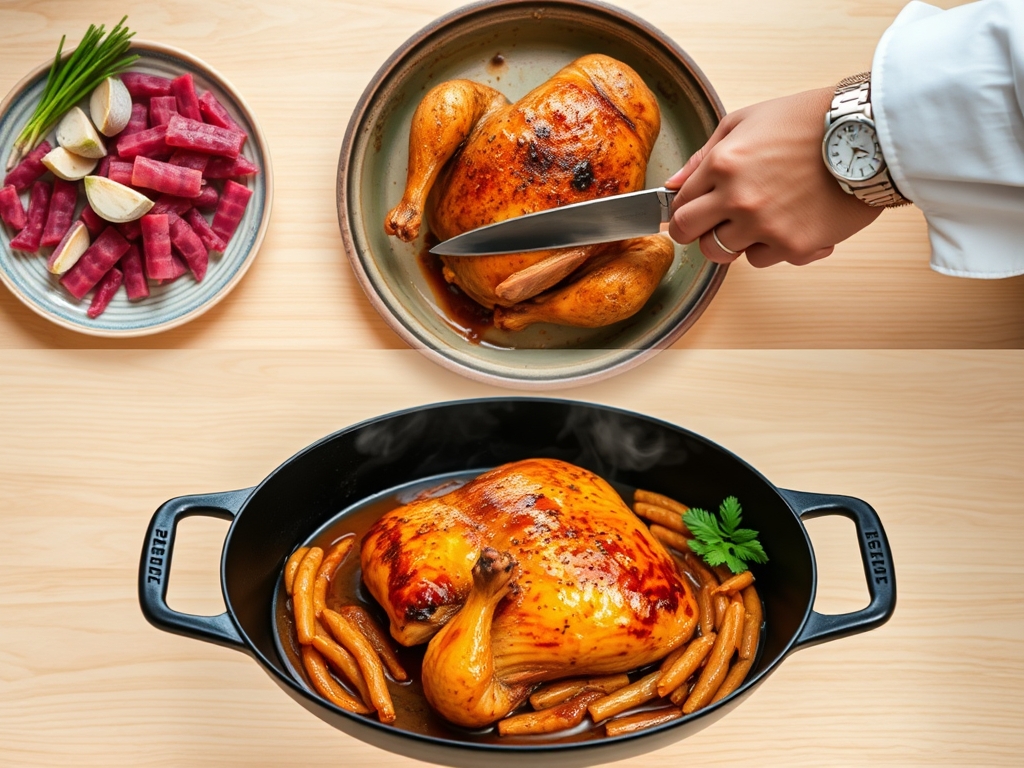
Use a bench scraper to clear your workspace and pat the chicken completely dry with paper towels. Any surface moisture will turn to steam in the oven, preventing the skin from becoming brittle and golden. Ensure the cavity is empty and dry as well.
Pro Tip: This is about Evaporative Cooling. If the skin is wet, the oven's energy is wasted evaporating water instead of browning the protein. A bone-dry surface ensures the Maillard reaction begins the moment the heat hits.
2. The Salt Saturation
Generously coat the bird in kosher salt, including the cavity. Use your hands to rub it under the skin of the breasts. This is the "Dry Brine" method. The salt initially draws moisture out, but then it dissolves into a concentrated brine that is reabsorbed into the meat, seasoning it deeply.
Pro Tip: Salt alters the protein structure by denaturing the strands. This creates a gel-like matrix that traps water molecules, ensuring the meat remains succulent even at high temperatures.
3. The Aromatic Infusion
Stuff the cavity with your halved lemon, garlic, and herbs. Do not overstuff; you want air to circulate inside to ensure even cooking. Tie the legs together with kitchen twine to tuck the wings. This creates a uniform shape for more consistent heat distribution.
Pro Tip: Using aromatics inside the bird creates a localized humid environment. As the lemon heats up, it releases citric acid vapors that help break down tough connective tissues from the inside out.
4. The High-Heat Launch
Start your roast at 425 degrees Fahrenheit. Place the chicken in a heavy-bottomed skillet or a roasting pan. The high initial heat triggers rapid fat rendering. You should hear a sizzle almost immediately.
Pro Tip: This is Thermal Searing. High heat causes the subcutaneous fat to liquefy and "fry" the skin from the underside, resulting in that coveted glass-like texture.
5. The Internal Monitoring
Use a digital scale to track your bird's weight before cooking, but use a digital probe thermometer to decide when it is done. Aim for 160 degrees Fahrenheit in the thickest part of the thigh, avoiding the bone.
Pro Tip: Remember Carryover Cooking. The internal temperature will rise by 5 to 10 degrees after you remove it from the oven. Pulling the bird at 160 ensures it reaches the safe 165 mark without overshooting into "dry" territory.
6. The Rest and Deglaze
Move the chicken to a warm platter. While it rests, use a saucier or the roasting pan to make a pan sauce. Add a splash of white wine or stock to deglaze the brown bits (fond) from the bottom of the pan. Whisk in a knob of cold butter to create a piquant emulsion.
Pro Tip: Resting allows the viscosity of the internal juices to increase. As the meat cools slightly, the muscle fibers relax and reabsorb the liquid, keeping it inside the meat where it belongs.
The Deep Dive
From a macro perspective, roast chicken is a nutritional powerhouse. A standard serving is rich in high-quality protein and essential minerals like selenium and phosphorus. If you are following a Keto lifestyle, the skin is your best friend as it provides healthy fats. For a Vegan alternative, you can apply these same seasoning and roasting techniques to a large head of cauliflower or a "Lion's Mane" mushroom steak to mimic the savory profile.
The Fix-It: Common Pitfalls
- Soggy Bottom: If the underside of your bird is wet, you likely roasted it flat in a pan. Fix: Use a roasting rack or a bed of thick-cut root vegetables to aerate the space beneath the bird.
- Burnt Skin, Raw Meat: This happens when the oven is too hot or the bird is too close to the heating element. Fix: Tent the breast with foil halfway through to shield it while the dark meat finishes.
- Rubbery Skin: This is caused by insufficient fat or low heat. Fix: Ensure you rub the skin with a lipid (butter/oil) and never roast below 400 degrees for the entire duration.
Meal Prep Science: To reheat leftovers without that "warmed-over" flavor, avoid the microwave. The microwave agitates water molecules, causing the fats to oxidize and taste "off." Instead, use a low oven (300 degrees) with a splash of stock to gently re-hydrate the proteins.
The Wrap-Up
Mastering the best roast chicken recipes is a rite of passage for any home cook. It is the ultimate "flex" that proves you understand the delicate balance of heat and chemistry. When you pull that shimmering, mahogany bird out of the oven, you aren't just serving a meal; you are serving a technical achievement. So, grab your tongs, trust your thermometer, and let the science of the kitchen do the heavy lifting. Your friends will think you are a genius, and honestly, you kind of are.
The Kitchen Table
How do I get the skin extra crispy?
The secret is air. Leave your salted chicken uncovered in the refrigerator for 24 hours. This dehydrates the skin's surface, ensuring that the oven's heat goes directly into crisping the fat rather than evaporating surface moisture.
Why is my chicken breast always dry?
Breasts cook faster than thighs. To fix this, roast the chicken breast-side down for the first 20 minutes, or use a "dry brine" to help the protein fibers retain moisture during the high-heat roasting process.
Can I roast a chicken from frozen?
It is not recommended. Roasting from frozen leads to uneven cooking where the outside overcooks before the center reaches a safe temperature. Always thaw completely in the refrigerator to maintain the integrity of the muscle fibers.
What is the best pan for roasting?
A heavy-bottomed cast iron skillet is ideal. It retains heat exceptionally well and promotes even browning. The low sides of a skillet also allow for better air circulation compared to a high-sided roasting pan.