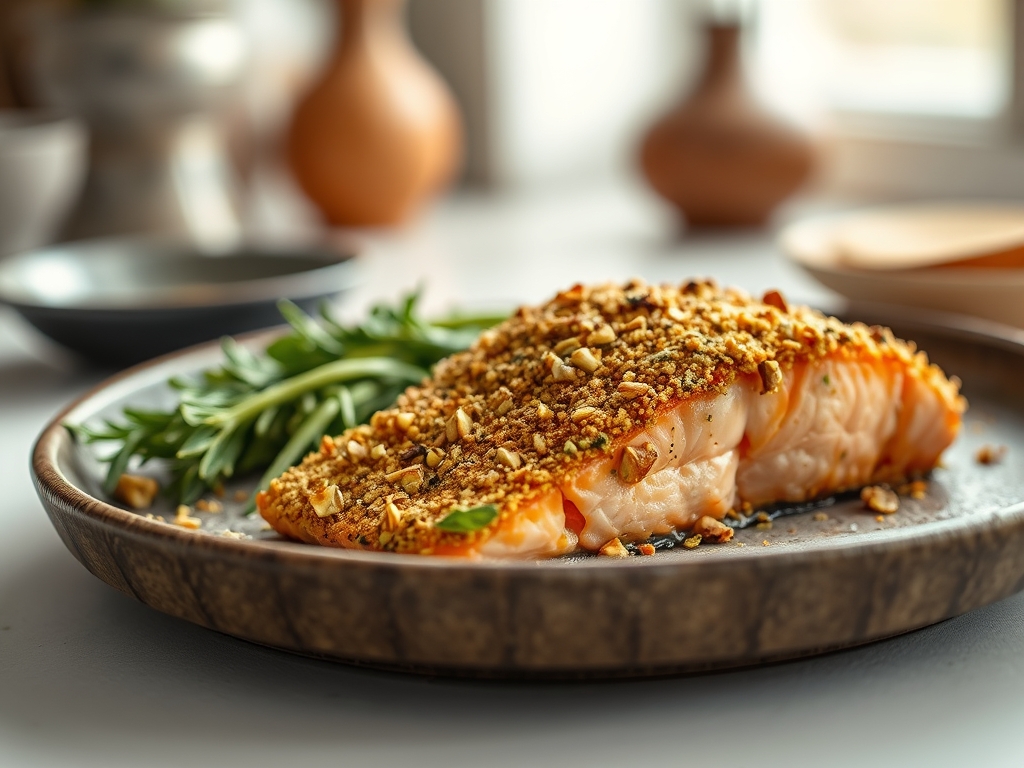
Picture a slab of Atlantic salmon, its flesh a vibrant coral, resting beneath a mosaic of emerald green nuts and golden breadcrumbs. When you search for pistachio crusted salmon recipes, you are looking for that perfect intersection of crunch and silk. This dish is a masterclass in texture; the snap of the nut meets the buttery, omega-3 rich flake of the fish.
The aroma filling your kitchen is not just "good." It is a complex chemical reaction. As the nuts roast, the oils within the pistachios undergo the Maillard reaction, developing a savory, toasted profile that balances the natural sweetness of the seafood. We are not just cooking dinner tonight; we are engineering a sensory experience that feels like a five-star bistro but takes less time than ordering a pizza. Grab your favorite apron and let's get into the mechanics of the perfect crust.
The Gathers:
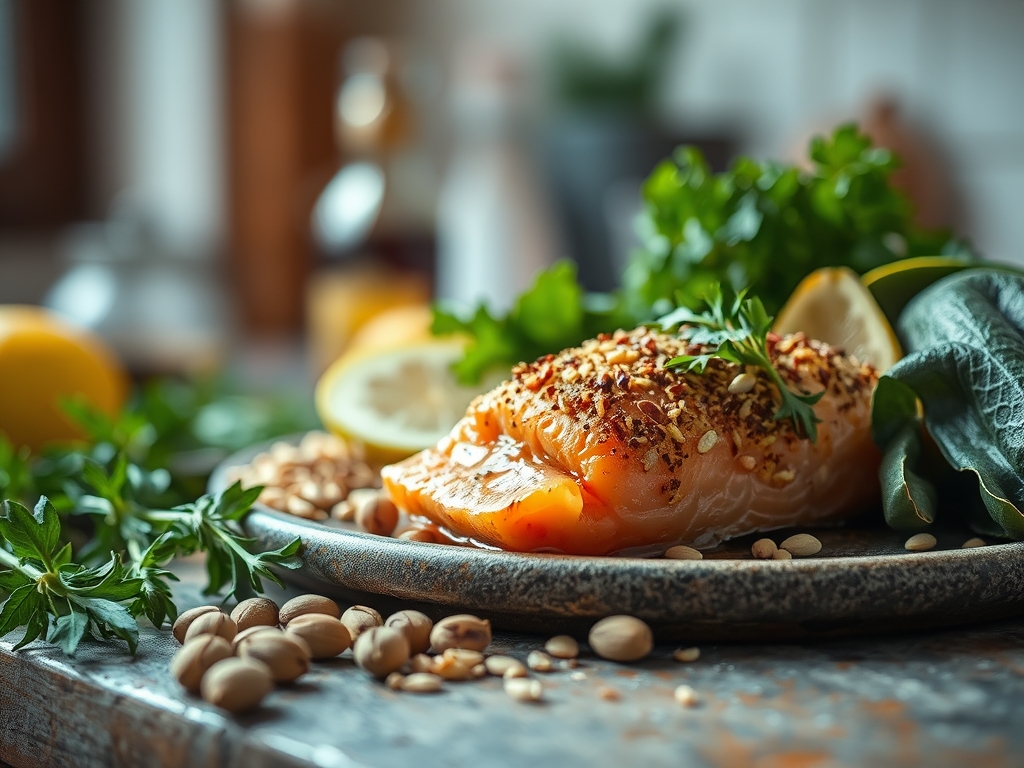
Setting up your mise-en-place is the difference between a frantic kitchen and a fluid one. Start with four six-ounce salmon fillets. Look for center-cut pieces with uniform thickness to ensure even heat distribution. You will need a half-cup of shelled, roasted pistachios. Use a heavy-bottomed skillet to lightly toast them if they feel soft; this removes moisture and ensures a viscous crunch.
For the binding agent, we use a combination of Dijon mustard and honey. The mustard provides a piquant acidity that cuts through the fat of the salmon, while the honey acts as a biological glue. You will also need Panko breadcrumbs for structural integrity, lemon zest for brightness, and a high-quality extra virgin olive oil.
Smart Substitutions: If you are avoiding gluten, swap the Panko for almond flour or crushed pork rinds. If you find pistachios too pricey, a blend of pepitas and walnuts offers a similar earthy depth. For a dairy-free "creamy" element, a thin layer of vegan mayo mixed with horseradish provides a sharp, stable base for the crust to adhere to.
The Clock
Efficiency in the kitchen is about "Chef's Flow." This means grouping tasks to minimize movement and maximize heat management.
- Prep Time: 15 minutes. This includes shelling the nuts, zesting the citrus with a microplane, and patting the fish dry.
- Cook Time: 12 to 15 minutes depending on the thickness of the fillets.
- Rest Time: 3 minutes. Never skip this.
The total commitment is under 35 minutes. To maintain flow, preheat your oven to 400 degrees Fahrenheit before you even touch the fish. While the oven stabilizes, prepare your crust mixture. By the time the oven chime sounds, your salmon should be dressed and ready for the rack.
The Masterclass
1. The Desiccation Phase
Pat the salmon fillets extremely dry using paper towels. Moisture is the enemy of the crust. If the surface is damp, the mustard will slide off, and the fish will steam rather than roast.
Pro Tip: This is about surface tension. Removing moisture allows the proteins to form a better bond with the "glue" layer, preventing the crust from sloughing off when you use your tongs to plate.
2. The Nut Pulse
Place your pistachios in a food processor or use a heavy knife to achieve a medium-fine crumble. You want a variety of sizes; some dust for coverage and some larger pieces for that signature "snap." Mix these with the breadcrumbs, zest, and a pinch of kosher salt.
Pro Tip: Do not over-process into a paste. Keeping the particles distinct allows air to circulate between the crumbs, which encourages aeration and a lighter, crispier mouthfeel.
3. The Emulsion Application
Whisk the Dijon and honey in a small saucier or bowl until it reaches a thick, uniform consistency. Brush a generous layer over the top of each fillet. This layer acts as a moisture barrier, keeping the juices inside the fish while the outside crisps.
Pro Tip: The sugars in the honey will undergo caramelization at 320 degrees Fahrenheit, creating a savory-sweet foundation that anchors the nuts to the flesh.
4. The Crust Compression
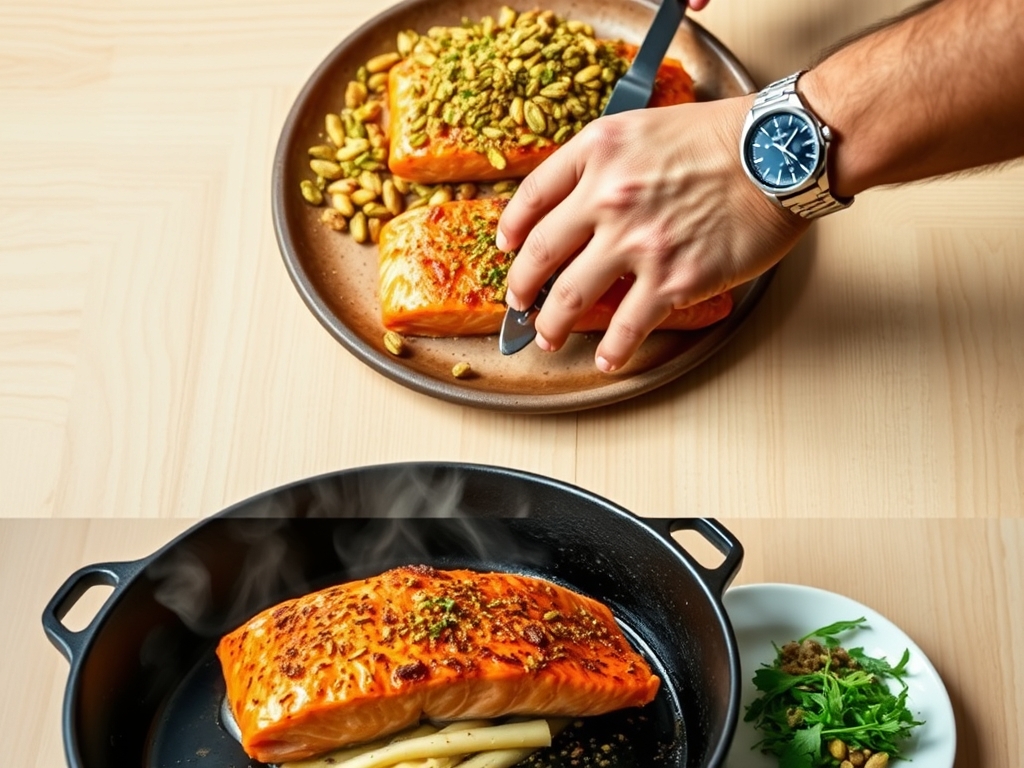
Press the pistachio mixture firmly onto the mustard layer. Do not just sprinkle it; use the palm of your hand to move the nuts into the "glue." Transfer the fillets to a parchment-lined baking sheet.
Pro Tip: Compression is key for thermal conductivity. A tightly packed crust transfers heat more efficiently to the top of the fish, ensuring the top and bottom cook at a similar rate.
5. The Precision Roast
Slide the tray into the center of the oven. Bake until the internal temperature reaches 135 degrees Fahrenheit on a digital thermometer. The crust should be golden brown and the fish should feel firm but give slightly under pressure.
Pro Tip: Thermal carryover is a real factor. The internal temperature will rise about 5 degrees after you remove it from the oven. Pulling it at 135 ensures a final, perfect medium of 140 degrees.
The Deep Dive
From a nutritional standpoint, this dish is a powerhouse. A single serving provides roughly 35 grams of high-quality protein and a dense profile of heart-healthy monounsaturated fats. The pistachios contribute potassium and vitamin B6, making this a functional meal that supports brain health and muscle recovery.
Dietary Swaps: For a Keto version, eliminate the honey and Panko, using only the mustard and crushed nuts. For a Vegan "salmon" alternative, this crust works beautifully on thick slices of roasted cauliflower or firm tofu blocks pressed to remove excess water.
The Fix-It:
- Soggy Bottoms: If the fish is sitting in its own juices, use a wire cooling rack set inside the baking sheet. This allows hot air to circulate under the fish.
- Burnt Nuts: If the crust browns too fast, tent the fish loosely with foil. This reflects radiant heat while allowing the internal temperature to keep rising.
- Bland Crust: Always salt your nut mixture. Without salt, the fats in the pistachios will taste flat and oily rather than vibrant.
Meal Prep Science: To reheat, avoid the microwave at all costs. The microwave agitates water molecules, which turns your crispy crust into a mushy mess. Instead, use an air fryer or a toaster oven at 300 degrees for five minutes. This "re-shocks" the fats in the crust, returning them to a crisp state without overcooking the delicate fish center.
The Wrap-Up
There is a reason pistachio crusted salmon recipes are a staple of elegant dinner parties. They offer a sophisticated profile with minimal technical difficulty. You have mastered the art of the moisture barrier, the science of carryover cooking, and the beauty of the Maillard reaction. Serve this with a crisp arugula salad or some roasted asparagus, and watch your guests marvel at the professional-grade texture you achieved in your own kitchen. You have the tools; now go create something delicious.
The Kitchen Table
How do I tell if the salmon is done without a thermometer?
Use a fork to gently press the thickest part of the fillet. If the flesh separates easily along the white lines of fat (the lamellae), the fish is done. It should be opaque but still moist in the center.
Can I use frozen salmon for this recipe?
Yes, but thaw it completely in the refrigerator first. Once thawed, use a bench scraper to move it onto paper towels and press out every bit of excess moisture to ensure the crust adheres properly to the surface.
Why did my pistachio crust fall off during serving?
This usually happens if the fish was too wet before the mustard was applied or if the crust wasn't pressed firmly enough. Ensure a "dry-to-wet" transition by thoroughly patting the fillets dry before adding your binding agent.
What is the best way to store leftovers?
Store in an airtight container for up to two days. When reheating, use a dry heat source like an oven to maintain the integrity of the nut crust. Avoid adding extra oil, as the pistachios already contain sufficient fats.