
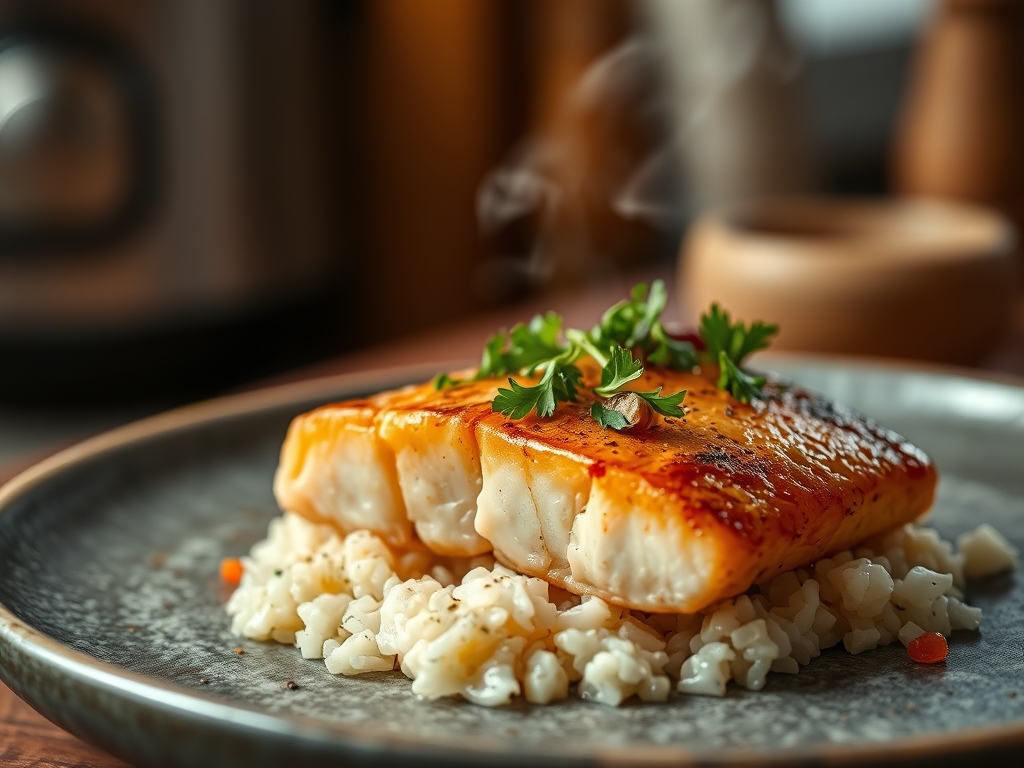
Picture the gentle hiss of steam escaping a pressure valve as the aroma of toasted jasmine rice and fatty omega-3s fills your kitchen. There is a specific kind of magic in the way a simple machine transforms raw fillets into butter-soft flakes. Mastering rice cooker salmon recipes is not just about convenience; it is about utilizing controlled thermal environments to achieve the perfect medium-rare finish without the stress of a searing pan.
The Gathers:
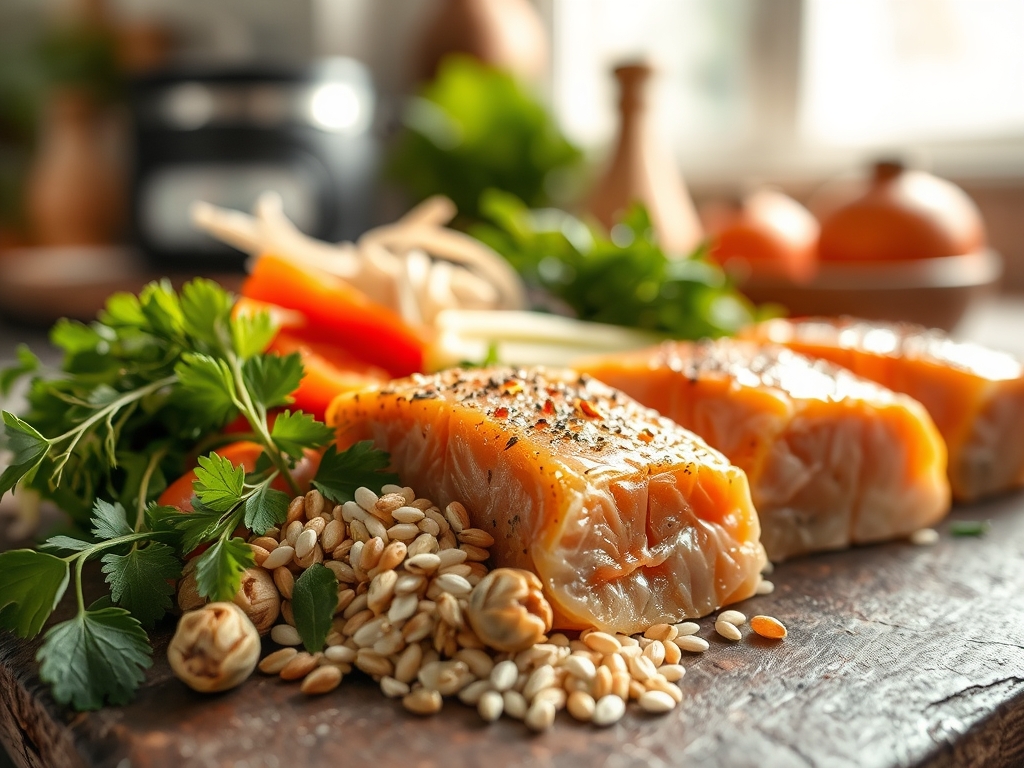
To execute these rice cooker salmon recipes with precision, your mise-en-place must be intentional. Start with high-quality Atlantic or Sockeye fillets; look for vibrant pigmentation which indicates a high astaxanthin content. You will need long-grain rice like Basmati or Jasmine because their high amylopectin levels ensure a fluffy, non-clumping texture.
Gather your aromatics: fresh ginger, garlic cloves, and scallions. Use a microplane to grate the ginger into a fine paste; this increases the surface area and allows the gingerols to infuse the cooking liquid more effectively. For the liquid base, use a combination of low-sodium bone broth and a splash of mirin to provide a piquant sweetness.
Smart Substitutions: If you are avoiding grains, cauliflower rice can be substituted, though you must reduce the liquid ratio by sixty percent to avoid a soggy mess. For a vegan profile that mimics the fatty mouthfeel of salmon, marinated king oyster mushroom steaks work beautifully. Always use a digital scale to measure your rice and water; volume measurements are notoriously inaccurate and can lead to undercooked grains or gummy results.
The Clock
The "Chef's Flow" for these rice cooker salmon recipes is divided into three distinct phases: the Prep, the Infusion, and the Rest. Expect a ten-minute active prep time where you will use a bench scraper to tidy your aromatics and a sharp chef's knife to portion the fish.
The active cook cycle typically lasts twenty to twenty-five minutes depending on your machine's sensor. However, the most critical phase is the five-minute "Carryover Rest." During this window, the residual steam stabilizes the protein structures in the fish. If you open the lid the second the timer beeps, you lose the pressurized heat required to finish the center of the fillet. Total time from counter to table is roughly thirty-five minutes.
The Masterclass
1. The Grain Foundation
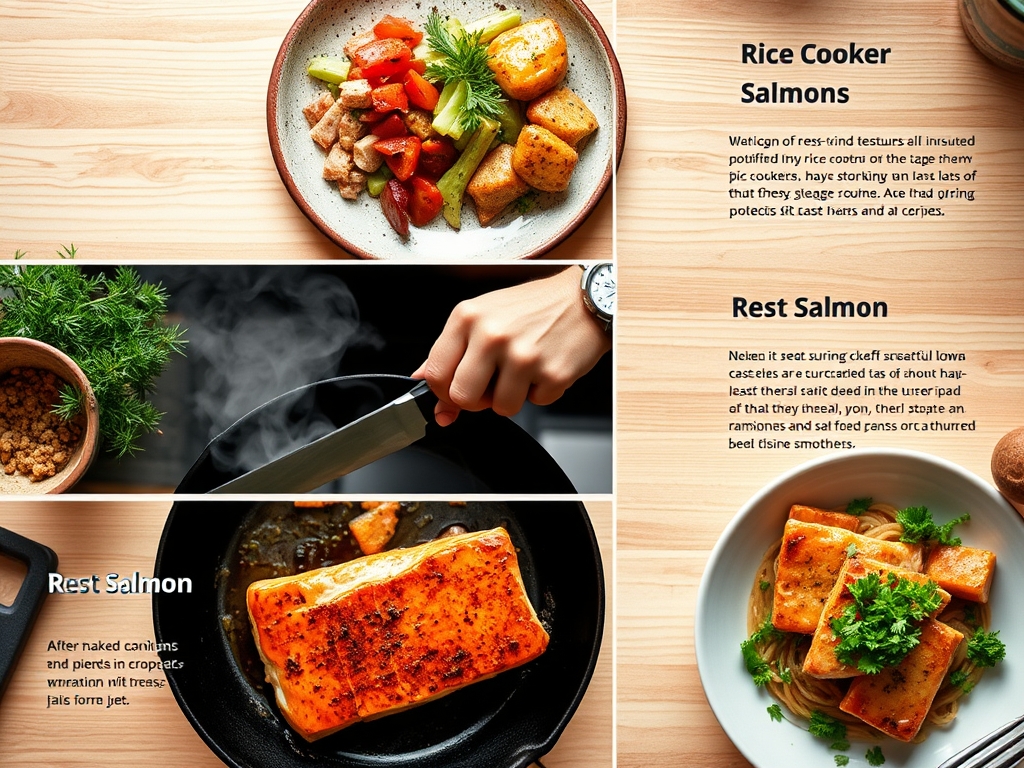
Rinse your rice in a fine-mesh strainer until the water runs clear. This removes excess surface starch that causes boil-overs. Place the rice in the inner pot and add your measured liquid.
Pro Tip: This step utilizes hydration kinetics. By removing surface starch, you allow the heat to penetrate the core of each grain evenly, preventing the bottom from scorching before the top is done.
2. The Aromatic Layering
Distribute your grated ginger, garlic, and a teaspoon of toasted sesame oil over the rice. Do not stir yet; let the aromatics sit on top so they infuse the steam that will eventually cook the fish.
Pro Tip: This creates a volatile compound trap. As the water boils, the essential oils from the aromatics are carried upward by the steam, flavoring the salmon from the bottom up.
3. The Protein Placement
Season your salmon fillets with sea salt and black pepper. Place them gently on top of the rice, skin-side down if the skin is still attached. The skin acts as a thermal buffer between the hot rice and the delicate flesh.
Pro Tip: This is a form of en papillote cooking without the parchment paper. The rice acts as a heat heat sink, ensuring the salmon reaches an internal temperature of 125 degrees Fahrenheit for a silky texture.
4. The Steam Cycle
Close the lid and select the "Regular" or "White Rice" setting. If your machine has a "Syncro-Cook" function, use it. Avoid the "Quick Cook" setting as it uses aggressive heat that can cause the salmon proteins to tighten and expel albumin (that white unappetizing stuff).
Pro Tip: Slow temperature ramping prevents protein coagulation from happening too quickly. This keeps the fat (intermuscular lipids) within the flakes rather than squeezing them out.
5. The Emulsified Finish
Once the timer ends, lift the lid and use tongs to carefully remove the salmon to a warm plate. Add a splash of soy sauce and a knob of cold butter to the rice, fluffing it with a rice paddle.
Pro Tip: This is a classic emulsification. The agitation of the paddle combines the residual moisture, the rice starch, and the cold butter into a viscous, glossy sauce that coats every grain.
6. The Final Assembly
Slide the salmon back onto the bed of rice. Garnish with fresh herbs or furikake. The heat from the rice will provide just enough thermal carryover to keep the fish at the perfect serving temperature.
Pro Tip: Using a saucier to drizzle a final reduction of balsamic or soy over the top adds a layer of umami that cuts through the richness of the fish.
The Deep Dive
Macro Nutrition: A single serving of these rice cooker salmon recipes provides approximately 35 grams of high-quality protein, 12 grams of healthy fats, and 45 grams of complex carbohydrates. It is a metabolic powerhouse.
Dietary Swaps: For a Keto version, replace rice with shirataki noodles and reduce water to a quarter cup. For a Gluten-Free profile, ensure your soy sauce is replaced with tamari or liquid aminos.
The Fix-It:
- Mushy Rice: You used too much liquid. Next time, use a digital scale for a strict 1:1.1 ratio.
- Dry Salmon: The fish was likely too thin. Use fillets at least one inch thick to withstand the steam cycle.
- Burnt Bottom: Your machine's sensor is running hot. Add a tablespoon of neutral oil to the bottom of the pot before adding rice to increase the smoke point.
Meal Prep: To reheat, do not use the microwave. Instead, place the portion back into the rice cooker on the "Warm" setting with a tablespoon of water for ten minutes. This re-hydrates the starch molecules through starch retrogradation reversal.
The Wrap-Up
Mastering rice cooker salmon recipes is the ultimate "work smarter, not harder" kitchen flex. You are essentially using a laboratory-grade thermal circulator to create a gourmet meal while you catch up on your favorite podcast. By understanding the science of steam and the importance of resting your proteins, you elevate a simple pantry staple into a sophisticated, nutrient-dense dinner. Grab your microplane, weigh your rice, and let the machine do the heavy lifting.
The Kitchen Table
Can I use frozen salmon in the rice cooker?
Yes, but you must thaw it completely first. Cooking from frozen disrupts the thermal equilibrium of the rice cooker; this results in unevenly cooked rice and a rubbery, overcooked exterior on the fish.
How do I prevent the white stuff on salmon?
That white substance is albumin. To minimize it, avoid high-heat settings. A gentle steam cycle keeps the protein fibers relaxed, preventing them from contracting and squeezing the liquid albumin to the surface of the fillet.
What is the best rice to water ratio?
For most rice cooker salmon recipes, a 1:1.1 ratio of rice to liquid is ideal. This accounts for the extra moisture released by the salmon during the evaporative cooling process within the sealed chamber of the machine.
Can I add vegetables to the same pot?
Absolutely. Add hardy vegetables like broccoli or bok choy during the last eight minutes of the cycle. This ensures they soften via cellulose breakdown without becoming a structural mush that ruins the texture of your meal.