
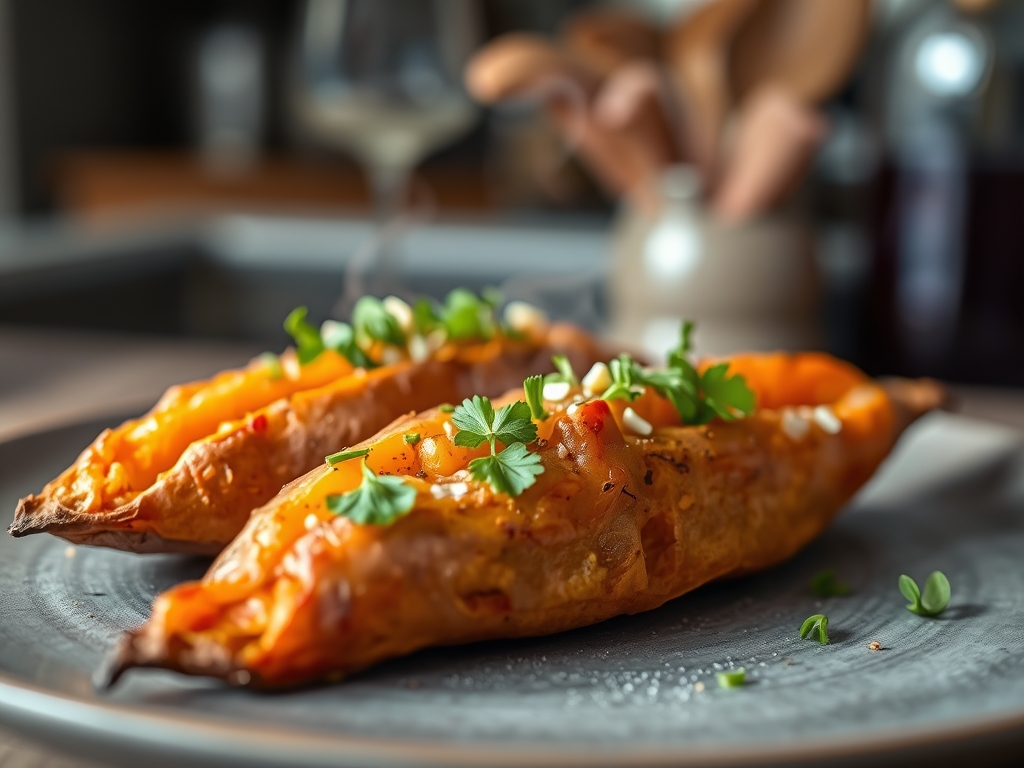
Imagine a kitchen where the air is heavy with the scent of caramelized sugars and toasted earth. You are standing over your counter, watching the convection fan of your machine whirl into a blur of heat. Finding the best air fryer baked sweet potato recipes is not just about dinner; it is about achieving that elusive, candy-like interior and paper-thin, crispy skin.
The Gathers:
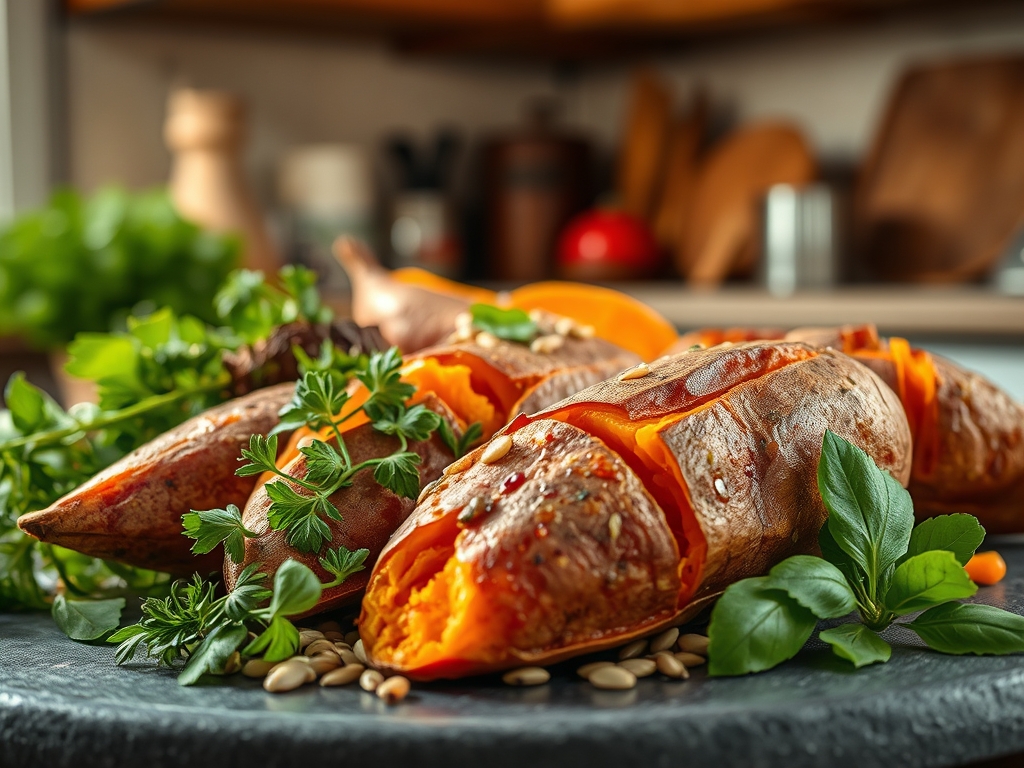
To master these air fryer baked sweet potato recipes, your mise-en-place must be precise. Start with medium-sized Beauregard or Jewel yams. These varieties possess a high moisture content and a viscous texture when cooked. You will need a high-smoke-point fat, such as avocado oil or clarified butter, to ensure the skin undergoes the Maillard reaction without acrid burning.
Gather your digital scale to ensure your potatoes are uniform in weight; this prevents the tragedy of one overcooked tuber and one raw center. You will also need flakey sea salt, a microplane for zesting aromatics, and a pair of silicone-tipped tongs for safe retrieval.
Smart Substitutions: If you are avoiding nightshades or seeking a lower glycemic index, Japanese White Sweet Potatoes offer a starchy, chestnut-like profile. For a piquant kick, swap standard salt for smoked paprika or a dusting of sumac to brighten the earthy notes.
The Clock
Efficiency in the kitchen is what I call the Chef's Flow. Preparation takes exactly five minutes: a vigorous scrub with a vegetable brush and a strategic piercing of the skin. The air fryer requires a three-minute preheat at 400 degrees Fahrenheit.
The actual cooking duration spans 35 to 45 minutes depending on the density of the tuber. However, the flow does not end when the timer dings. You must account for a five-minute rest period. This allows for thermal carryover, where the internal temperature continues to rise slightly, ensuring the center is fully custardy.
The Masterclass:
1. The Surface Tension Scrub
Begin by cleaning your potatoes under cold running water. Use a stiff brush to remove every trace of grit from the skin. Pat them bone-dry with a lint-free kitchen towel. Moisture is the enemy of crispiness; any residual water will create steam and result in a leathery texture.
Pro Tip: Drying the skin thoroughly allows the lipids to bond directly to the surface. This facilitates conduction, moving heat more efficiently from the air into the flesh of the potato.
2. The Perforation Protocol
Use a fork or a sharp paring knife to prick the potato six to eight times. These small vents allow steam to escape during the rapid heating process. Without these vents, the internal pressure can cause the potato to rupture, or worse, become unpleasantly mealy.
Pro Tip: Venting prevents the buildup of internal steam which can lead to enzymatic browning that tastes bitter rather than sweet. It keeps the interior fluffy.
3. The Lipid Coating
Place your potatoes in a bowl and drizzle with one tablespoon of oil. Use your hands to massage the fat into every crevice. This is where you add your salt. The oil acts as a glue, ensuring the seasoning is evenly distributed across the entire surface area.
Pro Tip: Using a high-smoke-point oil prevents the fats from breaking down into free fatty acids. This ensures a clean, toasted flavor rather than a scorched aftertaste.
4. The Convection Blast
Arrange the potatoes in the air fryer basket, ensuring they do not touch. Airflow is the magic ingredient here. If the basket is crowded, the air cannot circulate, and you will end up with "bald spots" where the skin is soft and pale.
Pro Tip: The Leidenfrost effect is not at play here, but airflow velocity is. Maximizing the space between items ensures the hot air hits the surface at a consistent speed for uniform browning.
5. The Mid-Way Rotation
At the 20-minute mark, use your tongs to flip the potatoes. Even though air fryers circulate heat, the heating element is usually at the top. Flipping ensures the bottom side, which sits on the tray, gets equal exposure to the direct infrared heat.
Pro Tip: Rotating the potatoes redistributes the internal juices. This prevents the sugars from pooling at the bottom and burning against the skin.
6. The Internal Check
Insert a skewer or a digital thermometer into the thickest part of the potato. It should slide in with zero resistance, like a knife through room-temperature butter. The internal temperature should register between 205 and 212 degrees Fahrenheit.
Pro Tip: This temperature range is the sweet spot where starch granules gelatinize. This process transforms the potato from a hard root into a velvety puree.
The Deep Dive
From a macro perspective, sweet potatoes are a powerhouse. A medium potato provides roughly 100 calories, 2 grams of protein, and 4 grams of fiber. They are exceptionally high in Vitamin A and potassium.
Dietary Swaps: For a Vegan delight, top with tahini and toasted sesame seeds. For a Keto-adjacent version (keep portions small), use heavy grass-fed butter and chives. To keep it Gluten-Free, ensure any spice blends used are certified, as some anti-caking agents contain wheat starch.
The Fix-It:
- Soggy Skin: You likely skipped the drying step or overcrowded the basket. Fix it by blasting the potato at 400 degrees for an extra three minutes with the door slightly ajar.
- Hard Centers: The potato was too large for the timer. Fix it by wrapping it in foil and letting it rest for ten minutes to utilize latent heat.
- Burnt Exterior: Your oil had a low smoke point or you used too much sugar in a dry rub. Fix it by scraping the charred bits with a bench scraper and focusing on savory toppings.
Meal Prep: To reheat and maintain "day-one" quality, avoid the microwave. The microwave agitates water molecules and makes the skin chewy. Instead, pop them back into the air fryer at 350 degrees for five minutes to re-crisp the exterior.
The Wrap-Up
Mastering air fryer baked sweet potato recipes is a culinary rite of passage that marries high-tech convection with ancient, root-earth flavors. By focusing on the science of moisture removal and heat distribution, you turn a humble tuber into a gourmet centerpiece. Grab your tongs, trust the process, and enjoy that perfect, caramelized crunch!
The Kitchen Table
Can I wrap the potatoes in foil?
No. Foil traps steam, which results in a boiled texture rather than a roasted one. For crispy skin, the potato must be exposed directly to the circulating hot air throughout the entire cooking process.
Why is my sweet potato oozing syrup?
That syrup is actually maltose. When the potato is heated slowly, enzymes break down starches into sugars. This caramelization is a sign of a perfectly cooked, high-sugar tuber and adds incredible flavor.
Do I need to soak the potatoes first?
Soaking is great for fries to remove surface starch, but for whole baked potatoes, it is unnecessary. Simply scrubbing and drying the skin is sufficient to achieve the desired textural contrast.
What is the best oil to use?
Avocado oil is the gold standard due to its high smoke point and neutral flavor profile. It allows the natural sweetness of the potato to shine without adding any heavy or greasy aftertaste.