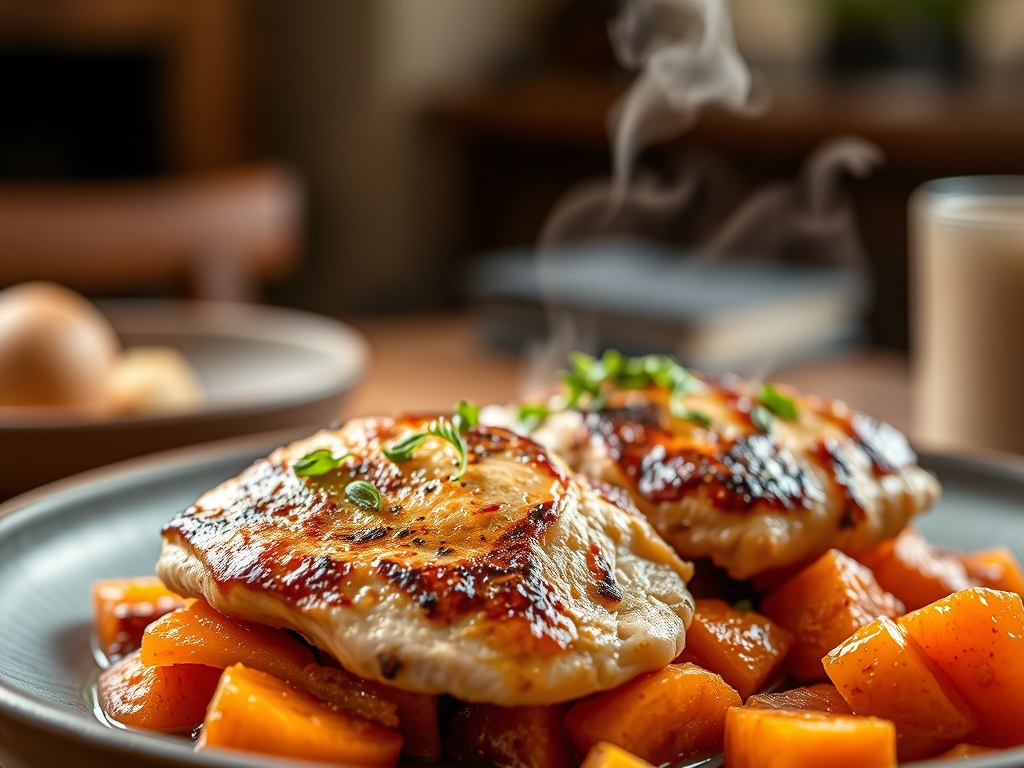
Imagine the scent of caramelized sugars hitting a hot pan as the golden crust of a perfectly seared bird meets the earthy sweetness of a roasted tuber. Finding the ultimate chicken breast with sweet potato recipes is about more than just utility; it is about mastering the delicate balance between lean protein and complex carbohydrates. We are transforming the standard gym-rat staple into a culinary masterpiece.
The secret lies in the chemistry of the ingredients. Chicken breast is notoriously unforgiving because it lacks the intramuscular fat of darker cuts; however, when paired with the moisture-retaining properties of a sweet potato, the result is a textural symphony. This guide will walk you through nine distinct variations that utilize these two powerhouses. We will explore everything from Mediterranean-inspired sheet pans to spicy Thai-infused bowls. By the end of this session, you will understand how to manipulate heat and acid to ensure your chicken remains succulent while your potatoes achieve that elusive, crispy exterior. We are moving beyond the bland and into the realm of high-performance, high-flavor dining.
The Gathers:
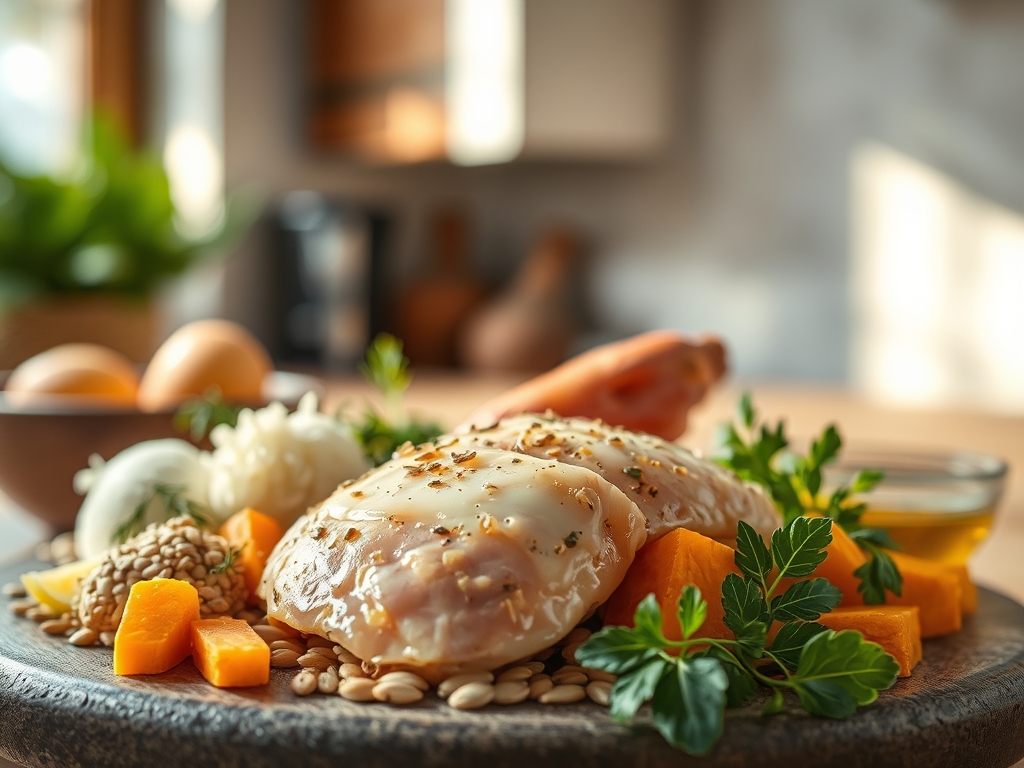
Before we ignite the burners, we must assemble our mise-en-place. Use a digital scale to measure your proteins precisely; standardizing the weight ensures consistent cooking times across all nine variations. For our chicken breast with sweet potato recipes, you will need high-quality, air-chilled chicken breasts. Air-chilling is superior because the meat has not absorbed excess water, allowing for a better Maillard reaction during searing.
For the sweet potatoes, look for Jewel or Beauregard varieties. These have a high sugar content and a viscous texture when roasted. You will also need a high-smoke-point fat, such as avocado oil or clarified butter, to handle the high heat required for browning. Aromatics are non-negotiable. Gather fresh rosemary, thyme, and garlic cloves. Use a microplane to zest a lemon; the essential oils in the zest provide a piquant lift that cuts through the starchiness of the potatoes.
Smart Substitutions:
If you are looking to lower the glycemic index further, swap half of the sweet potatoes for butternut squash or kabocha. If you find yourself out of fresh garlic, use a fermented black garlic paste for a deeper, umami-rich profile. For those avoiding nightshades, white yams offer a similar structural integrity without the same alkaloid profile.
The Clock
Efficiency in the kitchen is governed by the "Chef's Flow." This means identifying tasks that can overlap to minimize downtime. For these recipes, the total prep time is approximately 20 minutes, with a cook time of 25 to 30 minutes.
Start by preheating your oven to 425 degrees Fahrenheit. While the oven reaches temperature, focus on your knife work. Use a sharp chef's knife to cube the potatoes into uniform one-inch pieces. Uniformity is not just for aesthetics; it ensures every piece finishes cooking at the exact same moment. While the potatoes take their first ten-minute "head start" in the oven, you will prep and season the chicken. This staggered approach ensures the lean protein is not overcooked while waiting for the dense tubers to soften.
The Masterclass
1. The Initial Sear
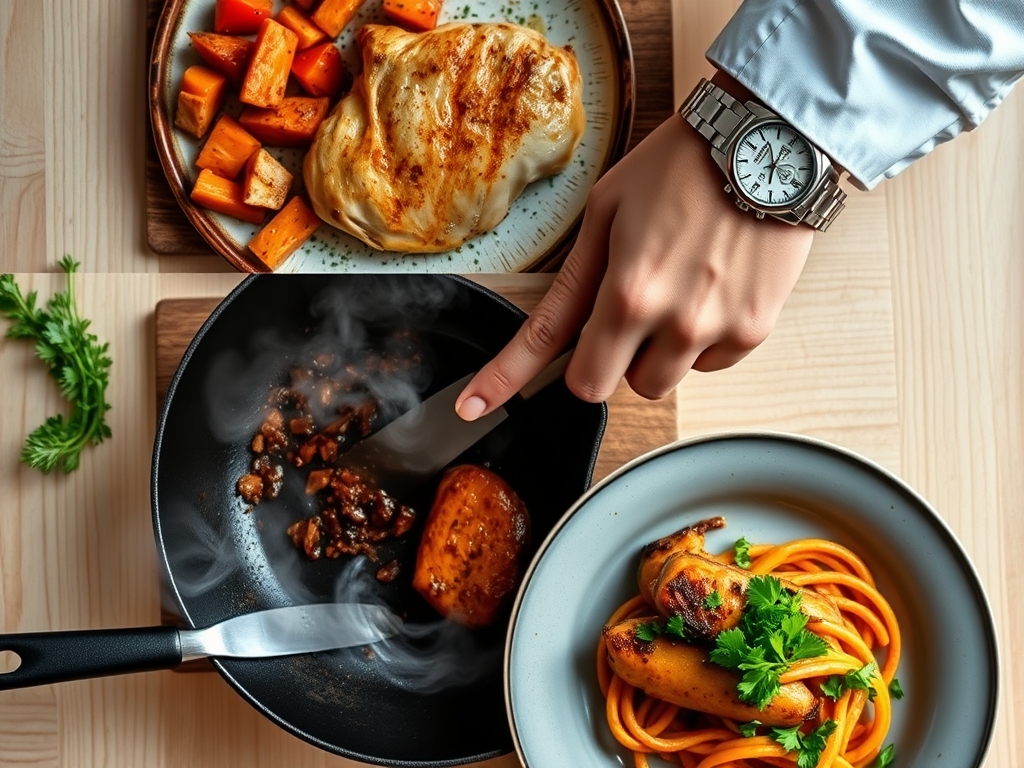
Heat a heavy-bottomed skillet over medium-high heat until the oil shimmers. Pat the chicken dry with a paper towel to remove surface moisture. Place the breast skin-side down (if applicable) and do not move it for three minutes.
Pro Tip: This step relies on the Maillard reaction, a chemical reaction between amino acids and reducing sugars that creates a brown crust. Moving the meat too early prevents the proteins from bonding and creates sticking.
2. Cubing the Tubers
Use a bench scraper to move your cubed sweet potatoes onto a parchment-lined baking sheet. Toss them with oil and sea salt until every surface is coated.
Pro Tip: Salt draws out moisture via osmosis. By salting just before the potatoes enter the high-heat environment, you encourage the surface to dehydrate and crisp up while the interior remains fluffy through starch gelatinization.
3. Creating the Infusion
While the chicken sears, add smashed garlic cloves and woody herbs to the pan. Use tongs to press the herbs into the hot fat, allowing the oils to infuse the cooking medium.
Pro Tip: Fat is a solvent for flavor. Many aromatic compounds in herbs are fat-soluble, meaning they require a lipid carrier to transfer their essence into the meat.
4. The Deglaze
Once the chicken is removed, the pan will have "fond," or browned bits, stuck to the bottom. Pour in a splash of chicken stock or dry white wine and scrape the bottom with a wooden spoon.
Pro Tip: This process is called deglazing. It captures the concentrated flavors of the seared protein and incorporates them into a sauce, preventing the loss of valuable umami compounds.
5. The Oven Transition
Place the partially cooked chicken directly on top of the roasting sweet potatoes. This allows the juices from the chicken to drip down and flavor the vegetables.
Pro Tip: This creates a micro-environment of steam. The moisture from the chicken prevents the potatoes from becoming too dry, while the dry heat of the oven continues to caramelize the edges.
6. The Rest
Remove the tray when the chicken reaches an internal temperature of 160 degrees Fahrenheit. Move the meat to a cutting board and let it sit for five to seven minutes.
Pro Tip: Thermal carryover will bring the chicken to the safe 165-degree mark. Resting allows the muscle fibers to relax and reabsorb juices; cutting too early causes the liquid to purge, leaving the meat dry.
The Deep Dive
When we look at the macro nutrition, this pairing is a powerhouse. A standard serving provides roughly 35 grams of protein and 25 grams of complex carbohydrates. It is rich in Vitamin A and potassium, making it an ideal post-workout recovery meal.
Dietary Swaps:
For a Keto version, replace 75 percent of the sweet potatoes with cauliflower florets. For a Vegan twist, swap the chicken for extra-firm tofu pressed with a saucier weighted lid to remove moisture. All nine recipes are naturally Gluten-Free, provided you use a GF-certified chicken stock for deglazing.
The Fix-It:
- Rubbery Chicken: This happens due to overcooking. Always use a digital thermometer and pull the meat at 160 degrees.
- Soggy Potatoes: You likely overcrowded the pan. Steam builds up when pieces are too close. Spread them out so air can circulate.
- Burnt Garlic: Garlic has a high sugar content and burns quickly. Add it during the last two minutes of searing or tuck it under the chicken during roasting.
Meal Prep Science:
To maintain "day-one" quality, store the chicken and potatoes in airtight glass containers. When reheating, add a teaspoon of water to the container and cover it loosely. This creates a steam chamber in the microwave, preventing the chicken from turning into leather.
The Wrap-Up
Mastering chicken breast with sweet potato recipes is the ultimate "level up" for your weekly routine. We have moved past the basic boiling and baking into a world of deglazing, infusing, and precision temperature control. Remember that cooking is a series of chemical reactions; respect the heat, trust your thermometer, and never skip the rest period. You now have the technical foundation to execute nine different flavor profiles using these same core principles. Go forth and sear with confidence!
The Kitchen Table
How do I prevent chicken breast from drying out?
Use a digital thermometer to pull the chicken at 160 degrees Fahrenheit. Allow it to rest for five minutes; thermal carryover will finish the cooking process while the fibers reabsorb essential juices for a succulent finish.
Why are my roasted sweet potatoes never crispy?
Avoid overcrowding the pan, which creates trapped steam. Ensure the potatoes are patted dry before oiling and use a high-heat setting of at least 425 degrees to trigger the Maillard reaction on the surface.
Can I cook chicken and sweet potatoes on one tray?
Yes, but you must stagger them. Start the sweet potatoes ten minutes early since they are denser. Add the chicken later so both components reach their ideal internal temperatures and textures simultaneously without overcooking the protein.
What is the best way to season these recipes?
Always season with salt early to penetrate the meat via osmosis. Use fat-soluble aromatics like rosemary or garlic in the pan to infuse the cooking oil, which then carries those flavors deep into the ingredients.